

Music Journalism Is Dead; Long Live Music Journalism
Music magazines now essentially come disassembled. It's up to you to cobble your favorite writing together into the publication of your dreams.

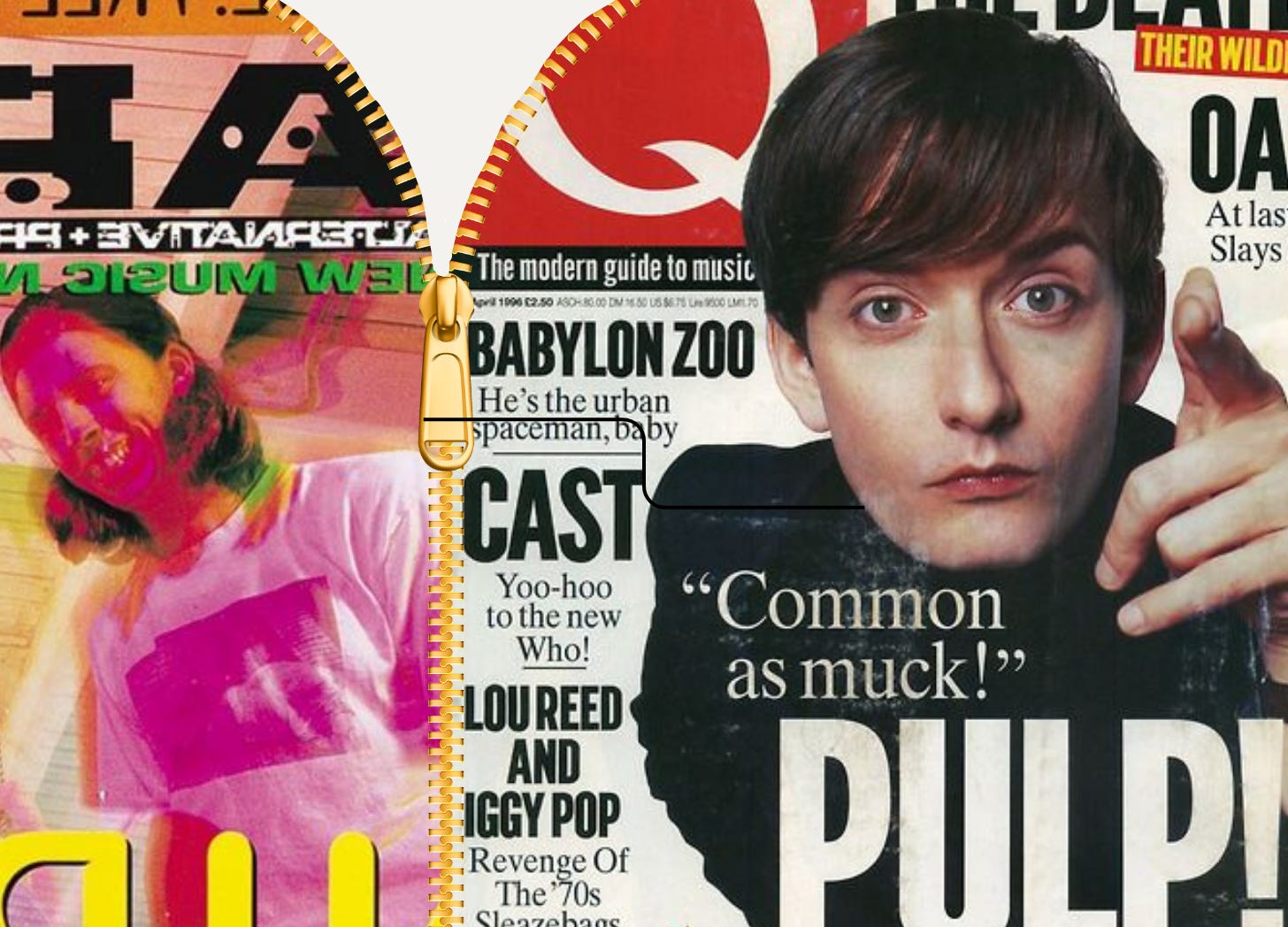
What a one-two punch this last week has been… not just because BrooklynVegan and AltPress have been dismantled, but also because Veeps — the livestreaming platform owned by Good Charlotte (yikes) and backed by Live Nation (double yikes) — were wielding the crowbar.
It’s a massive bummer. A blow to both music journalism and to the music industry – nay, the arts! – writ large.
A massive bummer but not a surprise. The bullshit has been snowballing for years. BrooklynVegan isn’t the first to succumb to the dual pressures of our short attention spans and corporate greed.
When journalism is reduced to “content,” it becomes easier to see it as a commodity and devalue it, something to be optimized and scaled. -Kevin Alexander
We have to let go of the idea that the old guard of music journalism can somehow be restored. It’s going to be tough, but there’s every reason to remain optimistic.
You’re just going to have to keep the magazine concept alive your own damn self.

Our Interests Can’t Be Monopolized
I’ve been noticing a weird contradiction in the supply vs. demand of music writing. Namely, that individual tastes keep fragmenting while the industry at large keeps consolidating.
This most recent round of layoffs is just one piece of a consolidation story you’ve heard unfold in many different ways on many different days.
Pitchfork was absorbed by Condé Nast. Ticketmaster sells the bulk of concert tickets in most markets. iHeartRadio owns something like 900 radio stations. Three major record labels account for 70% of all recorded music revenue. Like… ever. And that includes a bunch of “independent” labels that sit under their umbrella. Ticketmaster and Live Nation were just found guilty of running a monopoly. I was going to reveal that Warner owns SongKick, but in fact-checking myself, I found out that they recently sold it to Suno (yeah, the AI music generator).
It goes on and on. A powerful few hold all the cards, just like in every other aspect of our lives. Apart from the exorbitant prices, one of the ways we as mere consumers feel this influence is that the “indie mainstream” has been regressing to the mean. The same records end up on almost every end-of-year list.1 The most aggressive PR campaigns backed by the biggest dollars always seem to win out. There’s more great music being made than ever before, but the average person would never know — they’d probably claim the exact opposite, in fact.
Meanwhile, our actual tastes are becoming more and more diffuse. We sit in our perfectly curated, hyper-niche, algorithmically generated bubbles. We listen to esoteric subgenres and wear clothing micro-trends. There’s no expectation anymore that everyone will gather around the TV at the same time to watch the MTV Music Awards or even the Grammys.2 Maybe the entire nation glued to the cathode ray tube watching The Beatles make their Ed Sullivan debut is a ridiculously outdated example, but the fact remains that we used to be united around specific cultural moments that now feel fewer and further between.
“There will come a day when the only music magazine left standing will be one massive Pitchfork/Live Nation superbeast that features approximately 100 words of advertorial writing per new album release. Enshittification at its absolute peak, right?”
Such is the so-called “death of monoculture” that so many lament. And while it’s sad that we no longer have a universal experience to plug into, it also means that we’ve become largely immune to the sense that we MUST get on board with the next hot thing. There’s a sort of sleeper anti-gatekeeping side effect there that I can get behind.
Perhaps that’s part of why the old authoritative model of journalism has less pull than it once did. We no longer need professionals to tell us what to listen to, read, or watch in order to be relevant. And far more simply, instant access to all recorded music upon the day of its release means we can judge it for ourselves without reading any criticism about it in advance. All we need to know is that it exists in the first place!
Album Scores Are Meaningless

One guy’s 9 is another’s 5, and while there’s nothing wrong with that, it turns scoring into a useless shorthand.
Instead, we want “authenticity.” I’m scare-quoting it because the term has become a corporate buzzword, but there’s no denying how hungry we are for real people to give us their unfiltered, unpolished opinions and recommendations. Just look at the rise of music curators and fan TikTok accounts as a source of music discovery — there’s so much more of a personalized feel to this style. It’s also doing a lot of filtering work that we need now.
We never used to be so overwhelmed by choice. Journalists used to help us decide what records to buy. Now almost every single album is scored a 7 out of 10, and we’re supposed to derive meaning from that.
When you have these two forces at odds – the corporate monolith on the one end screaming for consolidation, the persnickety listener on the other screaming for personalization, where could that possibly leave the traditional music publication?
Pick an old band you love, get some new bands with a similar vibe... all hand-picked by yours truly. -Gabbie
The Death of the One-Stop Shop
Music magazines were once essential. If you loved music, if you wanted to know what was new or interesting or worthwhile, you needed a subscription to the Blenders and AltPresses and Qs of the world. You could augment with college radio or MTV2 (if you were lucky) or especially helpful record store clerks, but magazines were the lifeblood of new music discovery.
No matter how excellent BrooklynVegan was, it’s tough to claim that it was a necessity any longer. Not in the age of near infinite music supply. No matter how much these big boys consolidate and try to shove the same handful of records in our faces every press cycle, they’re still competing with so many more sources than before. Every streaming platform, every social media outlet, thousands of blogs and newsletters, all dividing and overwhelming our attention.
We’ve never had more music available to us, or more people trying to tell us what to listen to. What we’re losing when we lose publications like BrooklynVegan isn’t the existence of music journalism. Or good writing. Or music discovery.
We’re losing efficiency. We’re losing a one-stop shop.
It’s depressing that all of these talented writers have been laid off, but you’ll still be able to read many of them. It was only last December when Uproxx canceled Indiecast, and Steven Hyden has since become the third best selling music writer on Substack, with thousands of paid subscribers (meaning he is making a solid living just from this work). It’s been less than a week since BrooklynVegan editor Andrew Sacher started his newsletter, and he’s already a bestseller – #1 rising on the Substack music charts.
“Isn’t it better to find a handful of individual writers who align best with your tastes, and whose writing styles appeal to you most? No house style. No selling out to pressure. No compromising on scores to an editorial team.”
I’m not saying we shouldn’t feel empathy for laid-off music journalists – we should! It’s clearly a bad thing that our beloved music outlets are shuttering! Nobody should have to hang up their own shingle. But I’m not worried that they won’t land on their feet. I’m not worried that the quality of writing will decline. And I’m worrying less and less that we, the music fans, will not support them.
But for those of us lamenting the loss of the traditional music magazine, our work is just beginning.
I gave you just two examples of displaced writers who created their own newsletters. Eventually, more magazines will close their doors.
There will come a day when the only music magazine left standing will be one massive Pitchfork/Live Nation superbeast that features approximately 100 words of advertorial writing per new album release. Enshittification at its absolute peak, right?
Instead, you’ll be inundated by choice. It will feel like there are just as many critics, journalists, playlisters, TikTokers, vloggers, and bloggers as there are musicians. Figuring out who they are and which ones to read will be exhausting. What am I saying – it already feels exhausting. And that’s before we even get to the more obvious question of what music to listen to.
It also feels awfully familiar. Isn’t this exact sort of thing happening with all the video streaming services? Hulu, Netflix, HBO, Disney, all fracturing and asking for so much of your money that it makes you yearn for the relative simplicity of cable? You might feel ready to surrender to those conglomerates right about now. Maybe if you stick with Pitchfork and your Spotify algorithm, you can cover all your new music bases without putting in any extra effort.
I beg you to resist that urge. I beg you to put in that effort.3
Meet other music nerds.
Your New Favorite Music Magazine: Some Assembly Required
Cultivate your own personal music outlet. Build a feed of your favorite displaced journalists, amateur critics, curators, friends, whomever. The death of traditional media is your opportunity to lean into the personalization that you crave, and simultaneously build a community that’s been missing from both the traditional mags and from your algorithms.
Isn’t it better to find a handful of individual writers who align best with your tastes, and whose writing styles appeal to you most? No house style. No selling out to pressure. No compromising on scores to an editorial team.
I know it’s not an easy task, so let’s start it together here. Tell us in the comments about the people who help you discover new music.
The one-stop shop is fracturing4, but the need for knowledgeable people to help us filter through the onslaught of new music isn’t. Stop accepting scraps in the name of efficiency. And definitely don’t let your tastes get consolidated like the magazines are.
(When you refer friends, you get paid access to New Bands for Old Heads for free. Neat!)
Unless it’s The Quietus, god bless ‘em.
Eurovision, maybe?
I need an entire separate essay on the impossible economics of supporting music journalism now that it's mostly unbundled like this. IOU.
At least at the scale we’ve been accustomed to — of course plenty of smaller, scrappier publications like Glasshouse are going to power through.
Agree with all of this, even as a music journalist! One of the biggest problems with album scores is that we'll read a Pitchfork article and see a 0 or a 7 or a 10 and then take that objectively as a score of how 'good' it is. But these articles aren't written by some music god who perfectly applies scores based on the quality of the music, they're written by people, and those people are gonna have biases and their own musical taste. What those numbers actually represent is how much THEY liked the album. I've definitely heard albums that I loved but a magazine has given a low score, and albums that have gotten glowing reviews that I didn't enjoy.
What we really need are more ways to access communities of people who love music, find people who share our tastes, and then trade music with those people. Cause no one in the world has the exact same taste as Pitchfork does.
Thanks for being one of my favorite stackers. Yours in the Burgh, D.