

The Case For Being a Snob (Complimentary)
Or: How to Slow the Fuck Down

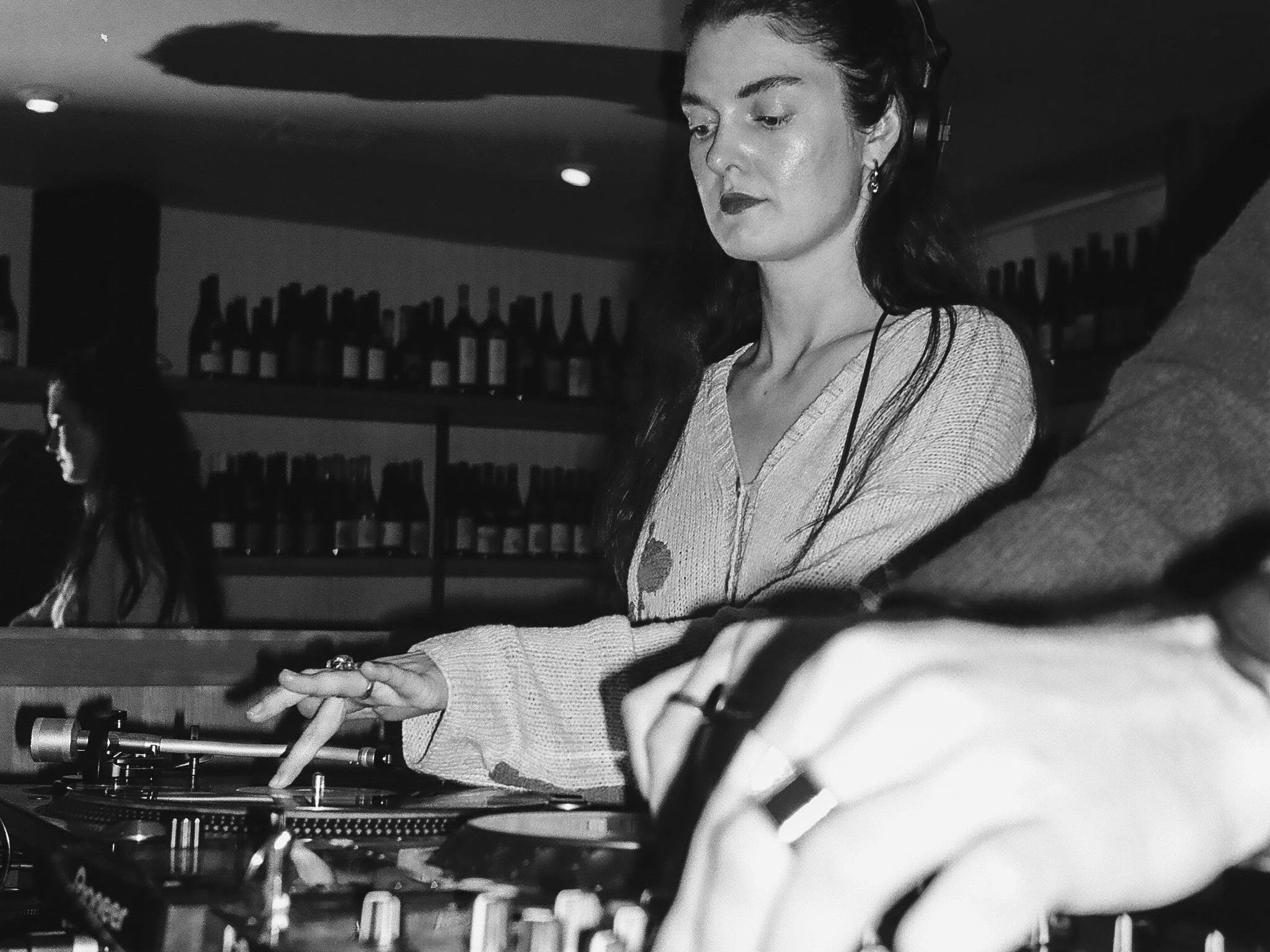
Ciao, ragazzi! This week and the next, I’m in Bologna taking Italian lessons for no particular reason except that life is short. While I’m away, I’m trying to slow everything down. No set plans outside of class. No eating on the run. No compulsive new album listening. I even thought briefly about not publishing. Instead, I asked one of my favorite music writers, Jacqui Devaney, to tap in while I’m tapped out. It just so happens that she wrote about exactly the kind of unhurried enjoyment I want to channel. Kismet, perhaps? But also an extension of the homework assignment I set for all of us back in January.
Enjoy. A presto.
-Gabbie
P.S. All footnotes are mine ;)

When I was young, in middle school and high school, my friends and I made a lot of mix CDs for each other. Receiving a mix felt like receiving love, for blank CDs were finite resources that could only be replenished with trips to a Wal-Mart in the next town over, and money was something we rarely had.
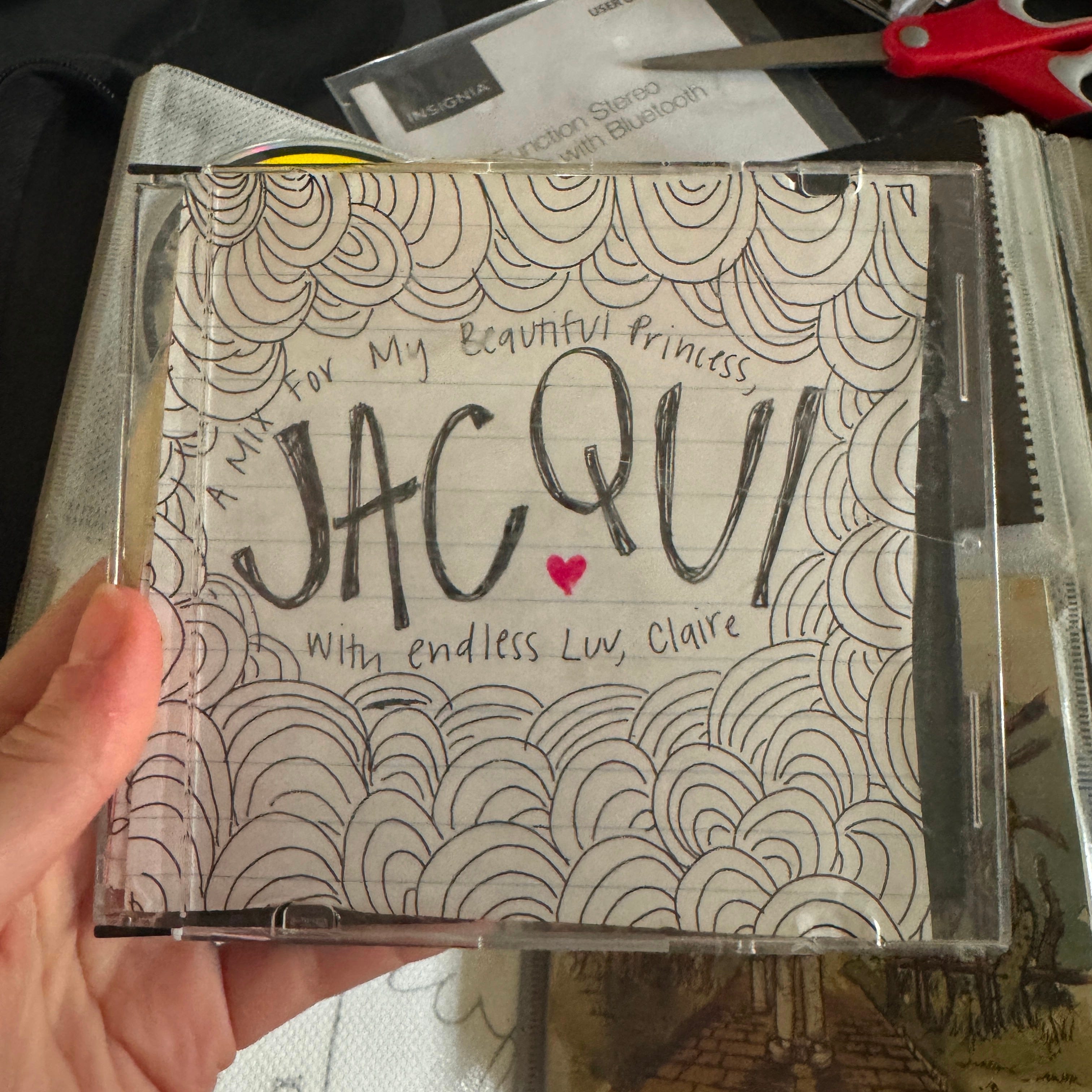
This was also one of the few ways to discover new music. A friend or older sibling might’ve gotten new CDs you hadn’t listened to yet, or they discovered a song on someone else’s mix, or they had good internet access and could download albums or rogue playlists from Limewire or Napster. No one bought music from iTunes unless it was around Christmas when gift cards turned up in stockings.
Everything was either the real deal — a physical CD — or completely illegal, which meant that there were stakes in what we listened to. One did not imbibe music glibly. Listening to a soon-to-be favorite song on a mix CD for the first time transcended earthliness and lifted you into an other-worldly euphoria; a high I chase to this day.
Listening to a song that hits you is like locating the center of the self in a way that words can’t adequately describe. Writers like to say that writing is about trying (and often failing) to evoke the deep feelings of life. But music can succeed where words must necessarily fail. Music takes those feelings and lifts them into a new plane. I’ve already used the word transcendental, but that’s the best one the English language has to describe what good music can do.
There’s a reason church begins and ends with music. Karl Ove Knausgaard, in a press release for a Lord Huron album, wrote that
“music [once] belonged to everyone and no one. It was collective. That seems an alien thought now, when all music created is tied to the person making or performing it, but also a compelling one, because it says something about the nature of music, what music is: it is everyone’s and no one’s. It flows between us, and it anchors us to the moment, because it is always heard here and now.”
I listen to this song at least once a day. Usually when I listen to it, I’ll start it over again. I’ve also been learning the dance in the music video.
Discovering new music used to happen as life happened. I would buy a CD when I had money and went to the store. A friend would give me a mix CD at school. Now, a person can discover new music at any moment of any day, and there are no limits to the amount of music they can discover. It’s endless. Sometimes, it feels like I’ve forgotten how to do anything else other than discover, so that I don’t actually hear anything that I’m listening to, but I’m already thinking of what I’ll hear next.
I form fanatical attachments to particular albums or songs every few weeks, which naturally taps the breaks on obsessive discovery. Last year, I went through a phase of listening to Jess Williamson’s Time Ain’t Accidental over and over and over again. The album wasn’t new to me, but I was going through a period of feeling painfully romantic about Austin and my younger days in the city, getting my heart broken and prancing around in a bikini all the time. Emotionally, I didn’t have space for anything else but that album. I needed the feeling of it like I needed air or water.
When I exhausted the indulgence of my feelings, weeks had passed. I didn’t have the will or the time to go back to everything I’d missed, and I didn’t feel particularly compelled to. I have a day job (writer at a tech company), a night job (DJing as ½ of Horse Opera), and am writing a novel or picking up freelance work in between. So, I’ve developed this belief that the music I need to hear is going to find its way to me. That feeling releases the pressure to listen to everything.
Maybe I’m getting woo-woo as I get older, too, which is true of everyone I know. Or maybe I’m just a little bit lazy and I’m justifying it by spiritualizing my shortcomings. Probably the truth lies somewhere in between.
I have a burgeoning theory that the compulsion to listen to everything (and to have an opinion about everything) new could be connected to our hyper-individualized society. Do we not trust that someone else could direct us to something we’ve missed? Do we have to do it ourselves? What do we gain by knowing all we can know?
Byung Chul-Han, a Korean-German philosopher, talks about how we’re living in an era of hyper-achievement and are obsessed with “doing it all.” By trying to do it all, we’re giving up the freedom to shape our own lives — our taste, our capacity, our time. An essential part of shaping something is cutting or editing or chiseling. It seems like no one, including myself, is really willing to do that, at least when it comes to consuming. Maybe we’re trying to square objective thinking into the round hole that is art. And there are gradations of objectivity. Some things are just bad or good — I really do believe that. But once we get into the good, objectivity breaks down.
I absolutely did not vibe with the Geese album last year. Does that mean that there is something fundamentally flawed in my own taste? I don’t think so. But I am interested in how it ended up at the top of so many other people’s lists.1 I have a hard time believing our disparate tastes could converge so cleanly, but who knows, maybe I’m wrong. There’s this thing called “psychological reactance,” which is “a defensive response that occurs when someone thinks their freedom of choice is being constrained,” which Anna Holmes expounds upon in a great piece in the Atlantic on the writer’s aversion to popular culture. It’s possible that I also couldn’t listen to or appreciate Geese and because I just so desperately didn’t want to engage in the conversation around them.
“Perhaps shrugging off culture is a form of self-preservation to those of us who are easily overwhelmed by the way social media algorithms accelerate consumption, and push individuals to engage in public conversation.” -Anna Holmes
I don’t want to be ruled by anything. I don’t want to be ruled by new releases. I don’t want to be ruled by schedules. I don’t want to be ruled by the pressures of other people’s tastes. My taste is mine, cultivated over a lifetime. Some people’s are similar and some aren’t. It’s important to me to honor the heritage of my own taste, which is not sophisticated in any way. I grew up on pop, classic rock, country, emo, and Methodist hymns. For years when I was young, I claimed my favorite album was Straylight Run’s self-titled album. For years. I think that lasted until college.
Maybe what it comes down to is not giving a fuck about what the internet thinks, which I’ve been trying to impress upon myself as much as possible. The internet is a very stupid place full of very fun and wonderful things. But all of my formative experiences have happened in the real world. The best listens of albums I’ve ever had have been on airplanes, trains, cars, on walks, laying on the couch without a screen reaching for my attention.2
The other day, a friend texted me and said, “you’re a snob (complimentary).” Maybe the best way to slow down is to be snobbish, not only about what you’re listening to or consuming, but with how you spend your time. We should luxuriate more, convalesce more. I’m working hard not to worry about what I might’ve missed and to instead enjoy with intensity the things that I’ve found.
I have a few methods for slowing down. Or for being a snob (complimentary).
Here they are.
Get off the internet.3
Ignore the internet.
Release the need to form An Opinion.
Let yourself use an imperfect system.
Listen to and find music in the real world.
Get off the internet.4
1. Get off the internet
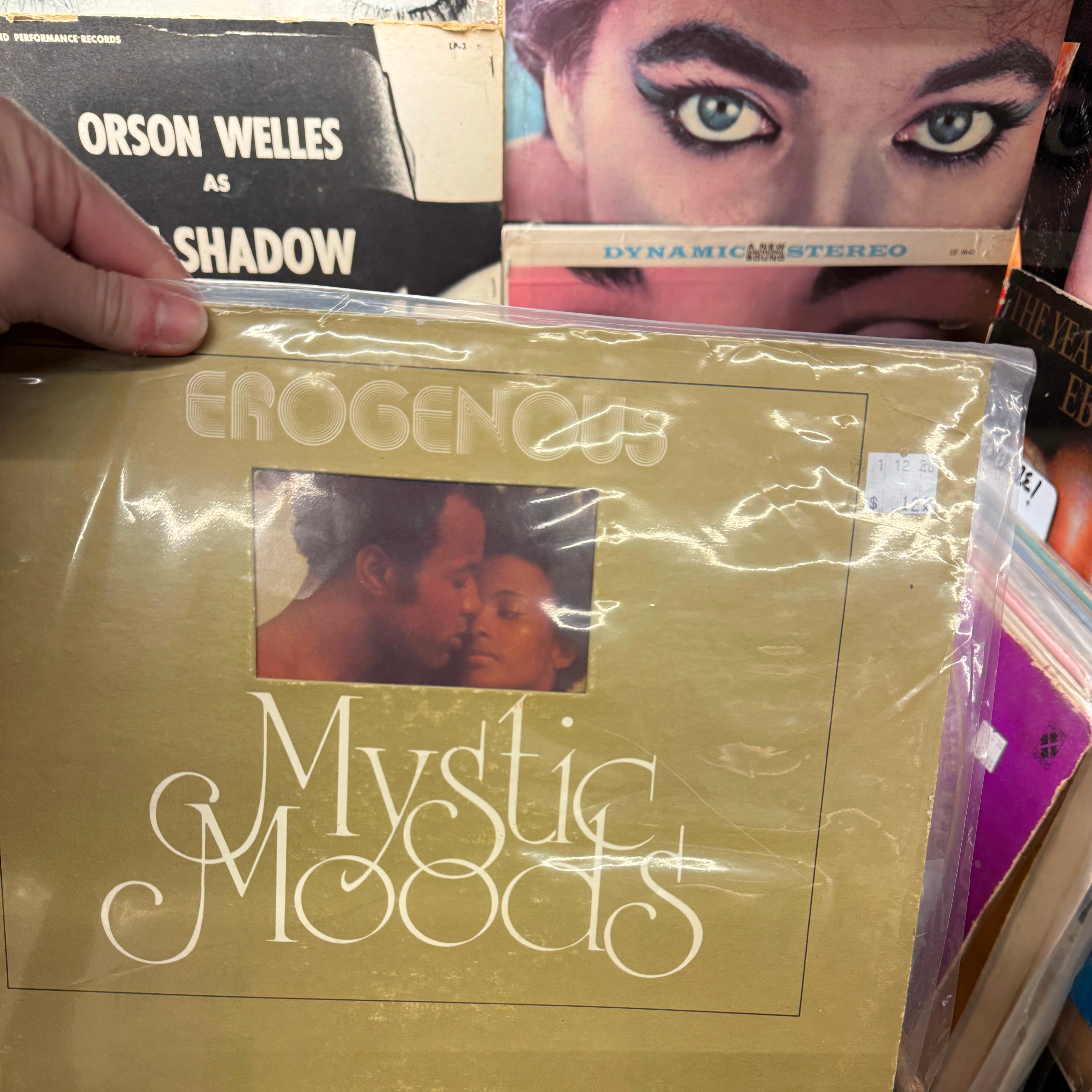
Go to a record store and listen to records you’ve never heard of before. Take a bunch of pictures of them and listen to them later. Ask the record shop employees what they like. Ask what records they’ve put on in the shop over the last day or week.
Read a book. Read a bunch of books. Write down what you think or what you’re feeling in a notebook. Go for a walk without your phone. Go out for the evening without your phone. Throw your phone into the sea.
The internet will tell you that you need a plan, a process, a system, a curriculum, to learn what you like and to understand what you like. You don’t. Plans, processes, systems, curricula are what arise when a person is avoiding what they actually want to do. It’s easy to make a plan. Much harder to write a book, essay, review. Much harder to sit down in a studio and make the song. Much harder to sit on your couch and listen to an album without checking your phone. Much harder to be bad at something you want to be good at.
The best way to slow down, to think about what you like, is to get off the internet and let your thoughts roam free. Eventually, opinions — or, more importantly, curiosities — will arise. Go toward them with all your might!
Recent things that have come up for me include: the color blue, the concept of divas, Zamrock, music that plays on a plane during boarding, Jeff Buckley, albums made exclusively of cover songs, road trips, when to choose silence over music.
2. Ignore the internet
I’m going to quote something I’ve already said: “the internet is a very stupid place.” There are lots of wonderful things on it and many people with many things to say. But you don’t need to know what those chumps on the internet are saying (including me, you don’t need to know what I have to say). What is useful is to know what you really think when your thoughts aren’t mediated through the discourse of small corners of the internet, a place where you feel shame that you thought a very popular album was capital-B Boring. This doesn’t mean you shouldn’t read the internet. Read it! Then ignore everything people say afterwards.
3. Release the need to form An Opinion
Sometimes, oftentimes, it’s not necessary to have an opinion about an album. You can just like it or dislike it and leave it at that. The more you abstract your way away from the music via words, the further the music will travel from you. I think this is true of most art. What you gain in understanding, you might lose in feral feeling.
4. Let yourself use an imperfect system
I’m saying this more for myself than anyone. The way I discover music, and subsequently categorize it, is messy. I have three or four playlists with loose themes that are definable only to me in a vague way. I don’t put those playlists on for listening. They are folders only. They are used when I am making other playlists for listening. I have so many archive playlists from the newsletter, but the titles aren’t very descriptive because they aren’t meant to be discovered via the streaming service, but via Substack where they live alongside a description. All of this is to say that I’m drowning in playlists and I’m drowning in album saves. But that’s okay. I’ve given up on trying to organize my life and instead I’m trying to live it.5
5. Listen to and find music in the real world
See some of the activities listed in “get off the internet.” But also Shazam shamelessly. Shazam in the vintage store bathroom at the DJ set, at the wine bar (especially at the wine bar), at the Zara, in the hotel lobby, in your friend-of-a-friend’s car. Shazam songs you already know and forgot the name of. I have Shazam’d some truly embarrassing stuff (a recent one was “Thunderstruck” by AC/DC). Your Shazam playlist will also tell you the date when you’ve Shazam’d a song, which is sort-of like keeping an audio diary.
Last summer, I Shazam’d “On The Beach” by Chris Rea somewhere in London:
Then I Shazam’d this song somewhere in Italy:
Then in September, I Shazam’d this one at a friends wedding:
Then I Shazam’d Celine Dion via a transistor radio in the bathroom of the wine bar Liar, Liar in Brooklyn:
And, look, there’s something even better you could do than Shazam shamelessly. You could ask a person what song is playing and see what they say.
6. Get off the internet
For real. Detach yourself from the expectations the internet may place on you and be free. Cultivate wild and weird taste that has nothing to do with the internet and tend to it with vigor.

Your turn.
What’s the best song you found in the real world?
Any unexpectedly excellent record store finds that you had no idea about beforehand?
What are other ways to discover new music outside of the internet?
P.S. Here are the songs I found IRL that I have on repeat:
I mean, we know the answer to this question NOW, don’t we? But for the record, Jacqui wrote this essay months ago, long before the new (and frankly ridiculous, IMO) “Geese is a psyop” discourse. Just putting that out there.
Same, girl. Same.
I’ll meet you in the street.
 | A guest post by
|
In the pre-Shazam days, I insisted on sitting in the movie palace, watching the end credits until near the end. That is when the song credits would finally scroll up the screen. Also, don’t use your bright-ass phone in a dark theatre.
Teenage days, we would read the liner notes of CDs to see what other bands were in the "thank you" section. I guess, today, that would be seeing who is touring with bands you like.